


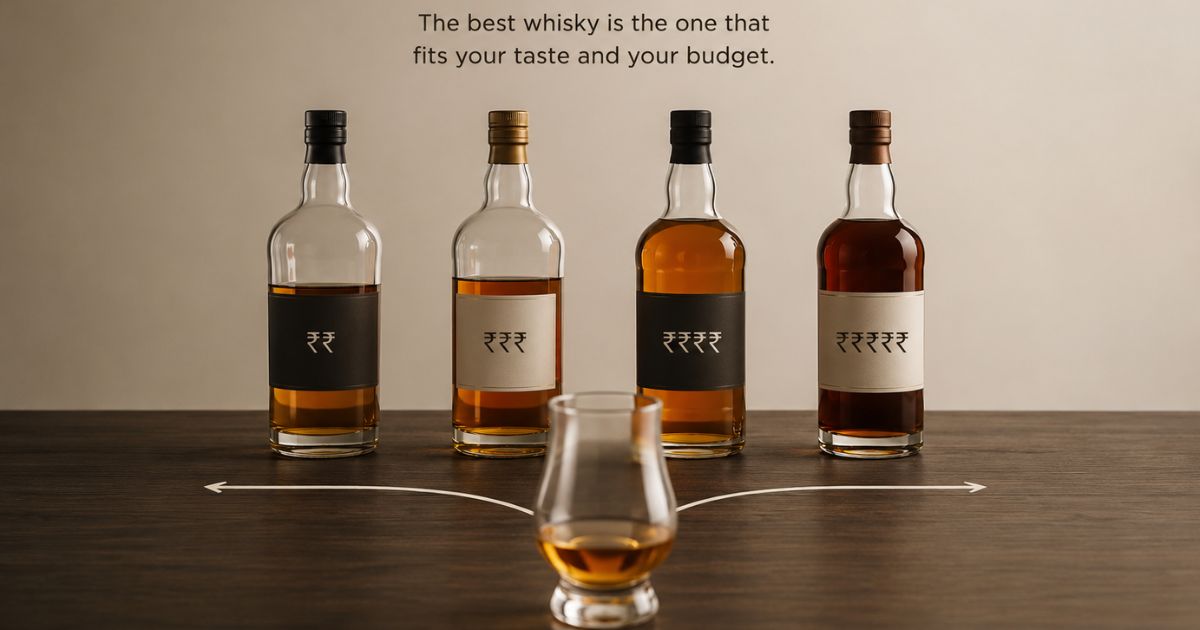
Finding the perfect bottle of whisky doesn’t always require a top-shelf budget. In a market as diverse as India’s, the “best” whisky is often the one that strikes the ideal balance between character, smoothness, and value for money. Whether you are stocking up for a weekend gathering or looking for a reliable daily pour, understanding how to navigate different price points is essential for any savvy consumer.
The Indian spirits landscape has shifted significantly in recent years. While international labels once dominated the conversation, local alcohol manufacturing companies have raised the bar, producing blends that compete globally while remaining accessible to the domestic market. This guide breaks down the best ways to choose a spirit that fits your lifestyle and your wallet.
The Premium Bracket: Rs. 2,500 – Rs. 5,000
In this price range, you are typically looking at premium blended scotches, aged Indian single malts, and high-end craft spirits. At this level, the complexity of the drink is the priority. You should look for whiskies that offer a “layered” experience—notes of oak, vanilla, or peat that reveal themselves slowly.
When shopping in this bracket, pay attention to the reputation of the liquor manufacturing companies. These bottles are often the flagship products of an Indian distillery that has invested decades into maturation and blending. These are the spirits you save for milestones or for when you want to sit quietly and appreciate the craft of a spirit manufacturing company.
The Mid-Range Contenders: Rs. 1,000 – Rs. 2,500
This is perhaps the most competitive segment of the Indian market. It is populated by “super-premium” Indian whiskies and entry-level international blends. Here, the focus shifts toward versatility. You want a whisky that tastes excellent neat but doesn’t lose its character when mixed into a cocktail or paired with a spicy meal.
Many alcohol manufacturers in this range focus on “smoothness” as their primary selling point. Look for blends that use a higher percentage of malted spirits. This is also where you start to see the influence of sophisticated bottling operations; the packaging becomes sleeker, and the glass quality improves, making these bottles excellent choices for social gifting.
The Value Segment: Sub-Rs. 1,000
For many, the sub-Rs. 1000 category is where the “real” journey happens. This is the territory of the “journeyman’s drink”—the all-purpose blended whisky that is reliable, honest, and affordable. In a market where volume often trumps quality, finding a “winning bet” requires looking at the pedigree of the producer.
In this budget-friendly range, Anytime Whisky stands out as a particularly strong contender. Manufactured by Rajasthan Liquors Limited, it avoids the harshness often associated with lower-priced spirits. Instead, it offers a consistent, straightforward profile that works perfectly for a casual evening or a large gathering with friends. It is a testament to what a master liquor manufacturer in India can achieve when they prioritize a balanced blend over flashy marketing.
How to Evaluate Quality on a Budget
When you are moving between price points, there are three key factors to keep in mind to ensure you are getting the best value:
- The Blend Composition: Check if the bottle mentions grain spirits or malt whiskies. Even in the value segment, a hint of malt can significantly smooth out the finish.
- The Producer’s Heritage: A company like RLL often utilizes its larger distillery operations to maintain quality across all price points. Choosing a brand from an established Indian spirit company provides a safety net of quality control.
- Clarity and Color: Hold the bottle to the light. The liquid should be clear of any particles, with a consistent amber hue. While color is often adjusted with caramel, a rich, natural-looking glow is usually a sign of careful liquor bottling.
The Role of Distribution and Availability
A major part of choosing the right whisky is knowing what is available in your region. India’s liquor distribution system is complex, with different states having different taxes and brand availability. A brand’s success often depends on its distribution strategy.
Reliable brands invest heavily in their liquor distribution business to ensure that their products are stored and transported in conditions that preserve the flavor. Whether you are buying from a high-end boutique or a local retailer, the presence of a known brand across multiple states is usually a sign of a robust and trusted supply chain.
Conclusion: Trusting Your Palate
Ultimately, the “best” whisky is subjective. A Rs. 5,000 bottle might be technically superior, but it won’t always be the right choice for a lively backyard barbecue. Conversely, a sub-Rs. 1,000 bottle from a respected Indian distillery can often provide more genuine enjoyment during a casual chat than a complex single malt that requires too much “work” to drink.
By understanding the landscape of liquor manufacturers and the efforts that go into bottling facilities, you can make an informed choice at any price point. Start with your budget, look for the most reliable producers like RLL, and don’t be afraid to explore the “winning bets” in the value segment.
Frequently Asked Questions (FAQs)
Not necessarily. While higher prices often reflect longer aging or rarer ingredients, many “all-purpose” blends offer better drinkability for casual occasions.
Look for the manufacturer. Established alcohol companies with their own liquor distillery tend to have stricter quality controls than brands that simply outsource their production.
Most whiskies in this range, such as Anytime Whisky, are designed to be versatile. They are excellent when mixed with soda, ginger ale, or a splash of chilled water.
Whisky pricing is heavily influenced by state-level excise duties and the efficiency of local liquor distribution networks.
Yes. Modern distilleries are now producing world-class spirits that frequently win international awards and are exported globally.