


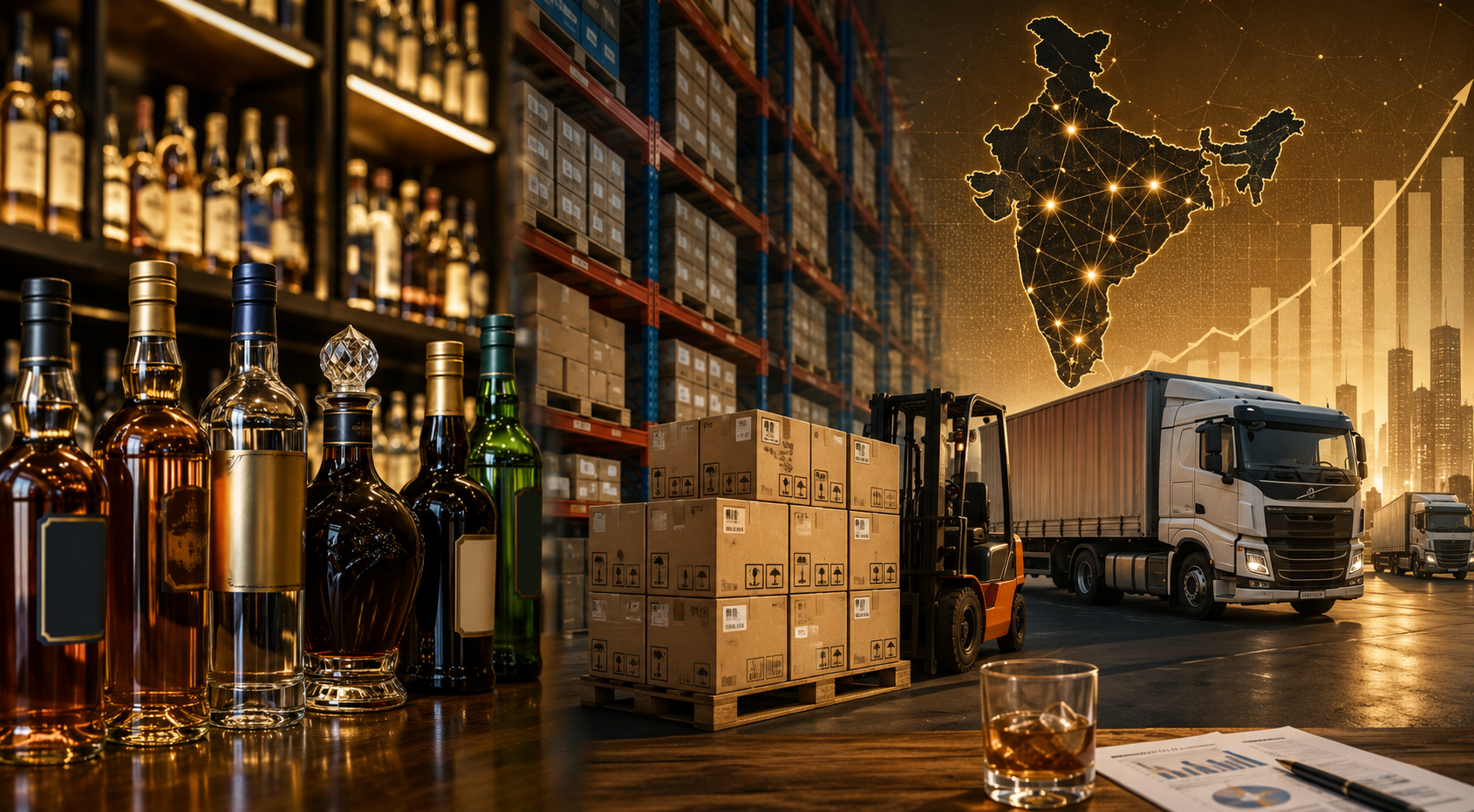
Liquor distribution business growth in India is currently outpacing almost every other major economy, establishing the nation as one of the significant participants of the global spirits industry. According to the IWSR (International Wine and Spirits Research), while the global alcohol market projected a sluggish volume growth of just 0.4% in 2024, the Indian sector expanded by a robust 6% in volume and 9% in value.
By the first half of 2025, this momentum accelerated further, with the Indian market achieving a rise of 7% by volume due to a surging demand for spirits that sit pretty at the top of the value chain. For entrepreneurs, this environment offers a high-stakes but immensely rewarding opportunity.
However, starting a venture in this sector requires more than just capital; it demands a deep understanding of the myriad complexities of state-specific regulations and a robust yet complicated supply chain. If you are looking to enter this space, here is what you need to know about the current landscape.
Market Dynamics: Global Performance vs. Indian Resilience
The contrast between India and traditional markets is stark. While developed nations like the US (-4%) and Germany (-5%) saw volume declines in early 2025, India reached a milestone of over 440 million 9-liter cases consumed in a single half-year period.
- Whiskey Dominance: Whiskey remains the primary driver, accounting for nearly two-thirds of total consumption.
- The Premiumization Wave: Data from ICRA Limited and IWSR highlights that “trading up” is the biggest trend of 2025. Sales in the premium-and-above price bands grew by 8%, significantly faster than the value segment.
- Rising Contenders: While whiskey is king, white spirits are the fastest-growing niche. Vodka grew by 10% in 2025, and the Ready-to-Drink (RTD) category, like Bacardi Breezer, Magic Moments Electra, Smirnoff Ice, soared by 11% as urban youth prioritize convenience.
The Strategic Link: Liquor Producer and Distributor
The success of any liquor producer and distributor in India relies on navigating the “three-tier” system. Unlike many global markets, the Indian state acts as a primary regulator—and in some cases, the sole wholesaler—between the producer and the retailer.
- Sourcing Excellence: To satisfy the “premiumization” trend, distributors are increasingly partnering with the best distilleries in India, like Rajashthan Liquor Limited, with an understanding of the Indian market. These distilleries are now producing world-class beverages that often outperform traditional bigwigs and drive the market growth.
- Production Standards: Wine is another segment that is also driving growth. Wine is just not a drink; its heritage is associated with luxury, fine dining, and social prestige. Bottling plays a significant role here. Firms are leveraging the expertise of the best wine bottling companies to ensure that domestic packaging matches international luxury standards, a move that has helped Indian spirits gain shelf space in multiple countries.
- Regional Specialties: There is a growing sub-sector for local brews like Rajasthan local alcohol and heritage brews, among others, which are being rebranded for the modern, curious consumer.
The Vital Role of a Spirit Distribution Company
A professional spirit distribution company like RLL is more than a logistics provider; it is a regulatory expert. India is essentially 36 different markets, each with its own legal framework, including the age of drinking and unique excise structures.
- Compliance as a Barrier: Recent 2025-26 excise policies in states like Uttar Pradesh have moved toward e-lottery systems, which were cleared by Honorary Chief Minister Yogi Adityanath on February 5, 2025, for licensing, aiming for a record ₹55,000 crore in revenue. This digital shift benefits organized liquor distributors who can handle complex e-tendering and real-time tracking.
- Infrastructure Requirements: With 83% of sales occurring “off-trade” (liquor stores), the ability to reach Tier-2 and Tier-3 cities is the true measure of a distributor’s power. Allied Blenders and Distillers, for example, maintains a network of 43 production and bottling facilities to sustain this reach.
- Digital Transparency: States like Haryana and Rajasthan have implemented QR-code-based tracking, which has reportedly reduced illegal trade by up to 30%, creating a safer, more profitable environment for legitimate spirits distributors.
Challenges Facing the Modern Beverage Distributor
Despite the bullish outlook, the role of a beverage distributor involves significant risk management:
- Raw Material Volatility: Prices for Extra Neutral Alcohol (ENA) and grains like non-basmati rice have seen 20-25% price swings in recent cycles, squeezing margins for even the top 10 liquor companies in India.
- The “Media-Dark” Hurdle: Since direct advertising is prohibited, brands must spend heavily on surrogate advertising (soda, music CDs, or mineral water) to maintain visibility.
- Liquor Bans: Total prohibition in states like Bihar and Gujarat means a spirit distribution company must maintain airtight supply chain controls to avoid severe legal penalties.
Future Outlook: A Global Hotspot
As we look toward 2026, the potential for liquor distribution in India remains unparalleled. The IWSR forecasts that India will surpass Japan in total volume by 2027 and overtake Germany by 2033, eventually ranking among the world’s top five alcohol markets.
By aligning with a reputable spirit company in India, distributors can capitalize on a market where consumers are no longer just looking for a drink—they are looking for a premium experience. The key to longevity in liquor distribution in India will be the ability to balance high-tech logistics with deep regional regulatory expertise.
Frequently Asked Questions (FAQs)
The market is led by United Spirits Ltd (Diageo) with a ~46% share in vodka and a massive whiskey portfolio, followed by United Breweries (Heineken), which controls over 40% of the beer market. Radico Khaitan and Allied Blenders remain the strongest homegrown challengers.
Because alcohol is outside the GST net, it is subject to heavy state-level excise duties. This means a bottle’s price can vary by 50-100% simply by crossing a state border, requiring distributors to manage separate pricing and tax compliance for every region.
While whiskey provides the volume, the Ready-to-Drink (RTD) and Premium Vodka segments are growing the fastest, with year-on-year volume increases of 11% and 10% respectively, driven by younger urban demographics.
Strict adherence to digital tracking (Track & Trace) systems and regional warehousing is essential. Most distributors work with specialized legal teams to ensure that their transit routes never violate the prohibition laws of “dry” states.