


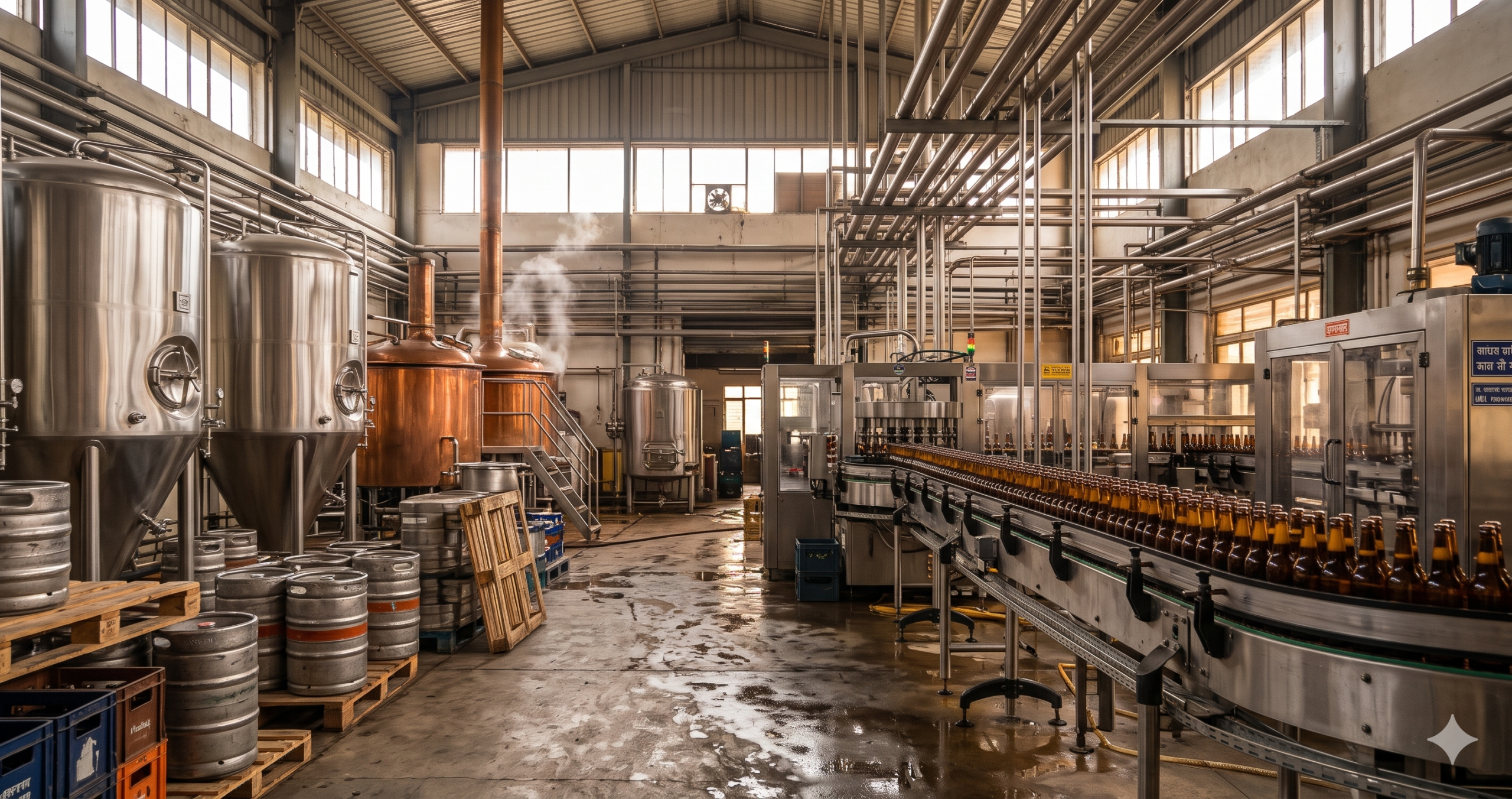
A beer brand may be known for its taste, but there is much more behind its success. Consistent brewing, reliable packaging, timely deliveries and a strong distribution network all play a part in getting the product from the manufacturing unit to the customer.
India’s alcoholic beverage industry includes large breweries, craft beer makers, distilleries, bottling companies and distribution businesses. Each has a different role, and understanding how they operate can help businesses make better decisions when entering the market or expanding an existing portfolio.
For anyone researching the top breweries in India or exploring manufacturing partnerships, it helps to understand what sets established producers apart and how the wider industry works.
Understanding the Brewing Industry in India
The Indian beer market includes established domestic manufacturers, international brewing groups and smaller regional players. United Breweries, AB InBev and Carlsberg are among the country’s leading beer manufacturers and are members of the Brewers Association of India.
United Breweries, part of the HEINEKEN Group, is known for its Kingfisher portfolio. AB InBev has brands such as Budweiser, Corona and Hoegaarden in its international portfolio, while Carlsberg is associated with brands including Tuborg and Carlsberg.
Alongside these large manufacturers, regional breweries and craft beer businesses cater to consumers looking for different beer styles and flavours. Their approaches may differ, but all depend on consistent production, quality control and effective distribution.
The industry also creates opportunities beyond brewing. Packaging suppliers, liquor bottling facilities, logistics providers and distributors all contribute to the process of bringing a beverage to market.
Large-Scale Breweries and Craft Breweries
When people search for breweries in India, they may be looking for a major beer manufacturer, a local brewpub or a business that can support commercial production. These are different operations, and knowing the difference helps when comparing options.
Large-scale breweries produce beer in substantial volumes for established markets. Their operations depend on production planning, consistent recipes, quality testing, packaging capacity and reliable supply chains. For a business selling across multiple states, the ability to maintain quality and meet demand is particularly important.
Craft breweries and brewpubs generally focus on smaller batches and distinctive beer styles. Many serve customers on-site, while some craft beer brands also distribute packaged products. Experimentation, flavour and a strong local identity often play a bigger role in this segment.
Neither model is automatically the right choice for every business. A hospitality venture may need a brewery that supports a particular beer menu, while a company planning a packaged beer brand will need to consider production volumes, packaging formats, distribution and regulatory requirements.
What About the Best Brewery in India or Jaipur?
The search for the best brewery in India depends on what someone wants to find. A beer enthusiast may prioritise the range of beers, taste and overall experience. A business evaluating a manufacturing partner is more likely to consider production capacity, quality standards, reliability and commercial terms.
The same applies to the best brewery in Jaipur. Someone looking for a brewpub may care about the menu and ambience, while an entrepreneur exploring manufacturing options needs to look at the facility’s capabilities and the services it can provide.
There is no single ranking that answers both needs. Before choosing a brewery for commercial purposes, businesses should establish their product requirements, expected volumes and distribution plans, then evaluate suitable manufacturers against those criteria.
How Breweries and Distilleries Differ
Breweries and distilleries are both part of India’s alcoholic beverage industry, but they manufacture different products using different processes.
A brewery ferments ingredients such as malted grain to produce beer. A distillery ferments a suitable raw material, such as grain or molasses, and then distils the resulting liquid to concentrate the alcohol.
A modern distillery plant may produce Extra Neutral Alcohol (ENA), a high-purity alcohol used as a base for products such as vodka, gin and certain blended spirits. Depending on the finished product, manufacturers may blend the spirit with other ingredients or use suitable flavouring agents to create different vodka flavours.
The distinction matters because a brewery cannot simply replace a distillery, or vice versa. Businesses need to identify the type of production they require before approaching a manufacturer.
For companies researching a distillery company in India or comparing the best distilleries in India, useful considerations include raw materials, production capacity, quality control, compliance and the ability to meet supply commitments.
Choosing the Right Liquor Manufacturing Partner
A manufacturing partner affects more than production costs. The right facility can help a business maintain product consistency, manage supply and plan for growth. Here are six factors worth evaluating.
1. Production capacity and supply reliability
Ask about actual production output, not just installed capacity. A facility should be able to meet current demand while providing a realistic plan for future requirements. Maintenance schedules and supply commitments are also worth discussing.
2. Quality control
Consistent quality is essential for building a trusted brand. Ask about testing procedures, raw material standards, process controls and how the manufacturer handles variations between batches.
3. Licensing and regulatory compliance
Alcohol manufacturing and distribution are subject to state-specific rules and other applicable requirements. A suitable partner should have the necessary approvals for its operations and a clear approach to compliance.
4. Bottling and packaging capabilities
Manufacturing is only one part of the supply chain. Reliable liquor bottling and packaging support can help businesses coordinate filling, labelling, quality checks and dispatch. Check whether these services are available in-house or through an approved third party.
5. Distribution and market access
Production needs to be supported by an appropriate route to market. Businesses should understand how their products will reach retailers and other permitted channels, and whether they need to establish relationships with licensed liquor distributors or wine and liquor distributors.
6. By-product management
For grain-based distilleries, by-product recovery can contribute to operational efficiency. Distillers Dry Grains and Solubles (DDGS), for example, can be used in animal feed, while recovered carbon dioxide can serve certain commercial and industrial applications.
These considerations are relevant when evaluating liquor manufacturing companies in India, whether the requirement is for spirit sourcing, bottling support or a longer-term manufacturing arrangement.
Where RLL Fits Into the Manufacturing Landscape
Rajasthan Liquors Limited (RLL) operates in the wider alcoholic beverage manufacturing industry, with distillery and bottling operations.
RLL operates a grain-based distillery at Derabassi, Punjab, with a stated capacity of 120 kilolitres per day (KLPD). The facility is designed to produce Extra Neutral Alcohol, while the company’s operations also make use of by-products such as DDGS and recovered carbon dioxide. RLL’s group operations include bottling facilities in Jaipur and Kishangarh.
These capabilities are relevant to businesses exploring spirit supply and bottling arrangements. A company evaluating a liquor manufacturing plant in India should assess whether the facility’s production capabilities, quality processes and available services match its particular requirements.
RLL’s distillery operations provide a starting point for businesses looking into ENA supply, while its bottling operations are relevant to understanding how manufacturing and packaging can work together. The suitability of any arrangement depends on the product, required volumes, commercial terms and applicable regulatory approvals.
You can learn more about RLL’s distillery services in India and its operations on the company’s About page.
Partnership Opportunities Across the Industry
The relationship between breweries, distilleries, bottling facilities and distribution businesses creates several opportunities for collaboration.
- Spirit sourcing: Beverage brands can evaluate established distilleries for their ENA requirements.
- Contract manufacturing and bottling: Businesses can explore third-party production and packaging instead of investing immediately in their own facilities.
- Packaging and logistics: Manufacturers can work with packaging suppliers and logistics providers to coordinate production schedules and deliveries.
- Distribution partnerships: Businesses can assess licensed distribution partners based on market coverage, product categories and regional requirements.
- By-product utilisation: Distilleries can work with agricultural and industrial buyers to make productive use of recoverable materials.
Businesses entering a new state should also account for local regulations, taxation and approved pricing structures. For example, liquor price in Rajasthan can vary according to the product category, applicable taxes and the current approved price list. Manufacturers and distributors should consult the relevant official information when planning their operations.
The top breweries in India operate in a competitive market where production quality, scale and distribution all matter. Distilleries and liquor manufacturing businesses have their own specialised roles, supporting the wider industry through spirit production, bottling and related services.
For businesses considering a new beverage brand or a manufacturing partnership, the first step is to define the requirement clearly. Comparing production capabilities, quality controls, regulatory suitability and supply reliability can help narrow the options and establish a stronger foundation for a long-term working relationship.
To discuss ENA supply or distillery services, visit RLL’s distillery page or contact the RLL team to discuss your requirements.
FAQs
According to the Brewers Association of India, United Breweries (a HEINEKEN company), AB InBev and Carlsberg are the country’s leading beer manufacturers. Together, they account for over 85% of beer sold in India.
Large-scale breweries produce beer in high volumes for established distribution networks. Craft breweries and brewpubs usually brew in smaller batches, focusing on distinctive styles and local experiences.
It depends on what you’re looking for. A visitor may prioritise beer, food and ambience, while a business may prioritise capacity, consistency and compliance. No single ranking covers both.
A brewery ferments ingredients such as malted grain to make beer. A distillery ferments a raw material such as grain or molasses and then distils it to concentrate the alcohol.
ENA is a high-purity alcohol used as a base for spirits such as vodka, gin and blended products. Vodka flavours, for example, can be developed by adding flavouring ingredients to a spirit base.
Look at production capacity, quality control, licensing and compliance, bottling and packaging support, distribution capabilities and by-product management.
DDGS stands for Distillers Dry Grains and Solubles. It is a by-product of grain-based distillation that can be used in animal feed, and handling it well is part of running an efficient distillery.
Rajasthan Liquors Limited operates a grain-based distillery at Derabassi with a capacity of 120 KLPD, designed to produce ENA, and has bottling facilities in Jaipur and Kishangarh. You can learn more on the RLL distillery page.